


Moving abroad isn’t just about a new country.
It’s about coming face to face with yourself.
A lot of people think that once they leave their current situation, everything will feel easier. That the problems they’ve been dealing with will somehow disappear.
They don’t.
Wherever you go, there you are.
You arrive in a completely new place, but your habits, your thought patterns, and your tendencies all come with you. That’s when it becomes very clear what’s actually you, and what was just your environment.
There’s nowhere to hide from that.
At the same time, you start changing in ways you didn’t expect.
Living in Puerto Vallarta, especially trying to do business here, forces you to become more patient. You don’t really have a choice. Things don’t move the way you’re used to. Processes take longer. Systems are different. Expectations are different.
You either adapt, or you drive yourself crazy.
Over time, you learn to let go of that constant urgency. You stop reacting to every delay. You realize it’s just how things work, and you adjust.
That shift alone changes you more than you’d think.
You also have to get comfortable standing out.
If you’re someone who worries about how you’re being perceived, that gets tested quickly. You’re not from there. You don’t fully understand how to move in that environment yet. You’re going to feel awkward at times. You’re going to get things wrong.
People notice.
You have to let go of needing to blend in perfectly, because you won’t. Not at first.
That forces a different kind of confidence.
Then there’s the part no one really explains properly.
You don’t actually understand a culture until you live in it.
You can read about it. You can watch videos. You can think you know what to expect.
You don’t.
When I moved to South Korea in my twenties, I had heard it was a more male-dominated culture. I thought I understood what that meant, and I told myself it wouldn’t really affect me.
It did.
Not in an obvious or dramatic way, but in smaller, more subtle ways that added up over time.
I was working as an English teacher, and I noticed that my male counterparts were often treated with a little more respect, a little more authority. It wasn’t something anyone openly talked about, but you could feel it.
Even though I genuinely loved Korea, the culture, and the people, that part of the experience still affected me more than I expected.
It’s hard to explain, but it felt like being slightly on the outside of something you were still part of.
It’s one of those things you can’t fully understand until you’re actually living inside it.
It’s the same in Mexico.
You hear things like “mañana” and think you understand the pace of life. You don’t really get it until you’re trying to get something done and it takes far longer than you expected. Then you realize this isn’t just a saying. It’s a completely different way of operating.
It’s not even just that things take longer.
It’s that no one really tells you exactly what to do.
You assume there’s a clear process. A checklist. Step one, step two, step three.
There isn’t.
Instead, you end up doing this strange kind of dance, talking to different people, getting partial answers, being sent somewhere else, and slowly piecing things together over time.
Sometimes you get the right information. Sometimes you don’t.
Sometimes it takes a long time to find the one person who actually knows what needs to be done.
Even when you do find that person, it doesn’t always mean you’ll get a clear answer right away.
There’s often a relationship element to it.
You start to realize that information isn’t always just given. It’s something you earn over time, through trust, through connection, and by learning how things work beneath the surface.
No one explains this to you.
You figure it out by paying attention, by reading between the lines, and by slowly adapting to a completely different way of operating.
It can be frustrating at first, especially if you’re used to systems that are more structured and predictable.
Over time, you adjust.
You become more patient, more flexible, and a lot less attached to things happening in a straight line.
I’ve seen projects here that never get finished because people, especially foreigners, never quite figure out how to navigate that process.
Even locals get caught in it sometimes.
It’s a different system, and it takes time to understand.
At some point, you also start to notice things that no one really explains to you directly.
There’s a word here, mordida, which loosely refers to an unofficial payment to help move things along.
It’s not something anyone openly talks about. It’s something you become aware of over time, just by observing how things actually work.
That can feel uncomfortable at first, especially if you come from a place where everything is expected to be clear and structured.
The more time you spend here, the more you realize it’s not about one place being better or worse than another.
It’s just different.
Every country has its own way of doing things. This is one of those differences that you don’t fully understand until you’re living inside it.
You also start to see your own country differently.
When I left Canada, I began to understand what it actually means to be Canadian. Not in an abstract way, but in the way people think, behave, and interact. You notice things you never would have seen if you had stayed.
You see it clearly because you’re no longer inside it.
Moving abroad doesn’t just introduce you to a new place.
It shows you who you are, where you come from, and who you’re becoming.
Once you see that, you don’t really go back to being the same person.
If you’re thinking about moving abroad, or even building something in a place like this, there’s a lot you won’t fully understand until you’re here. Some things are easy to talk about. Others are harder to explain unless you’ve actually gone through it.
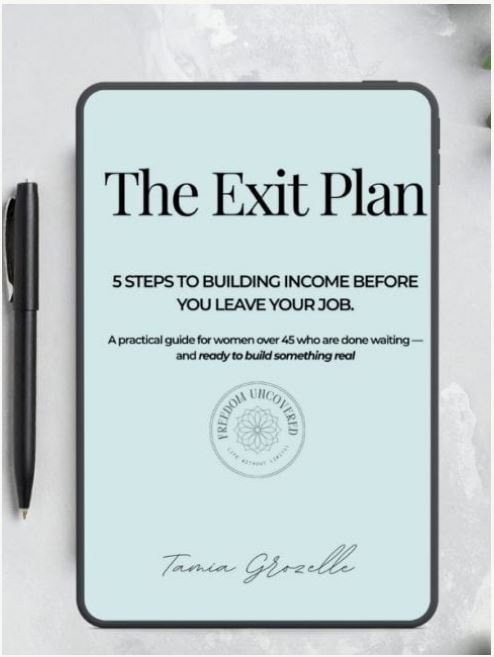
If you’re standing at that edge — wondering whether to jump — that’s exactly what I write about at Freedom Uncovered. The real experience of building a different kind of life, not just the highlight reel.
.